The method
EVERY NUMBER
ON THIS SITE
CAME FROM ONE TEST
“Quick-drying” is the most common word in this category and one of the least useful, because nobody says quick compared to what. So we picked one method, ran it on every piece we sell, and published the minutes. The method is below in full, including the parts that make our numbers look worse.
- Fabric soaked to saturation, then wrung once
- 21 °C, 50% relative humidity, no forced air
- Hung, not laid flat
- Timed until no moisture transfers to dry paper on contact
This is a lab-style comparison between our own items. Your gym, your sweat rate and your airflow will give different numbers.
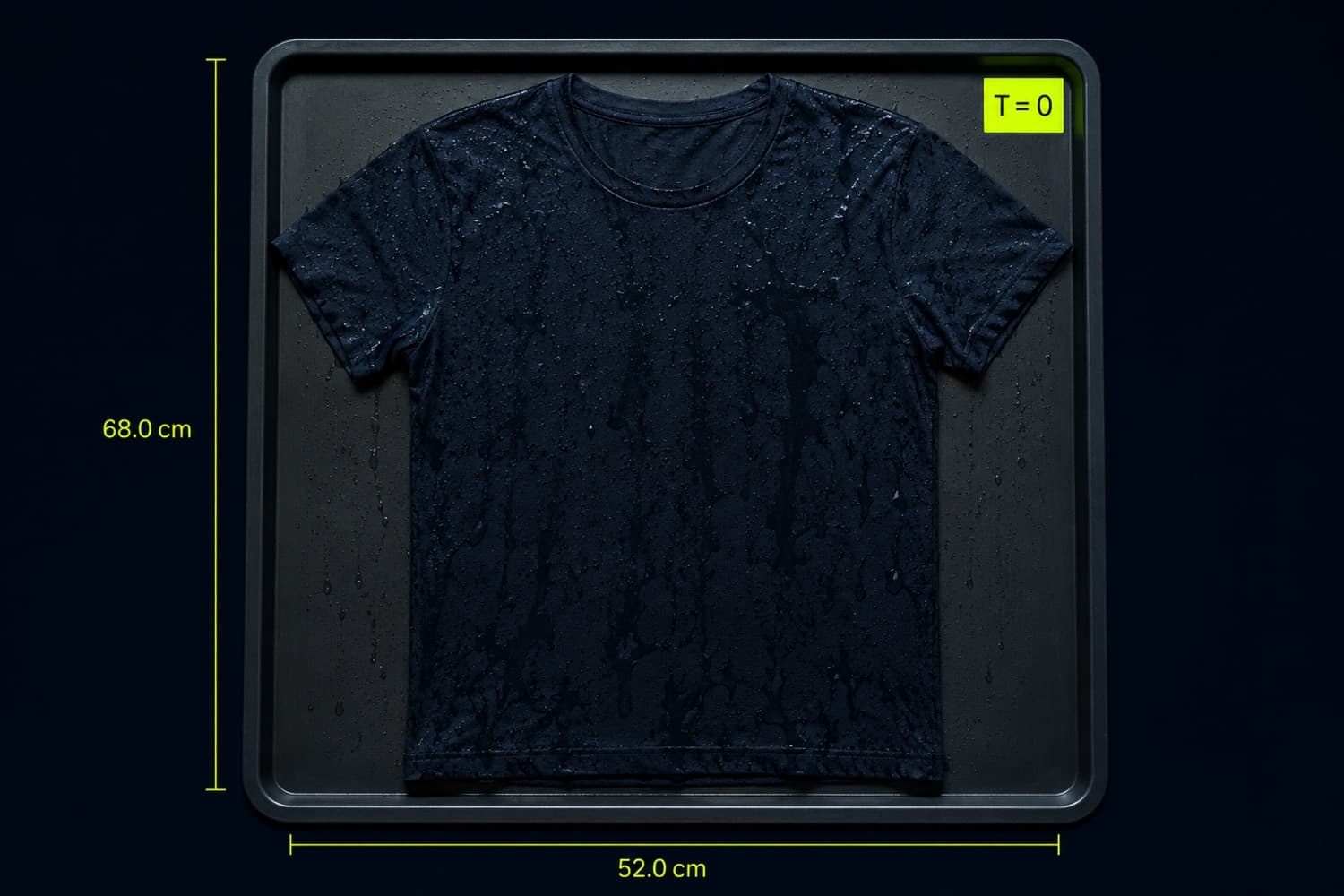
Soaked to saturation, wrung once
The garment goes into water until it holds no more, then it is wrung a single time by hand. It is not spun, not pressed between towels and not shaken out. A second wring would take minutes off every number in the table below, which is exactly why we do it once.
21 °C, 50% relative humidity, no forced air
Measured in a closed room with no fan, no open window and no radiator running. Air movement changes drying time more than most fabric differences do, so it is held still for every test.

Hung, not laid flat
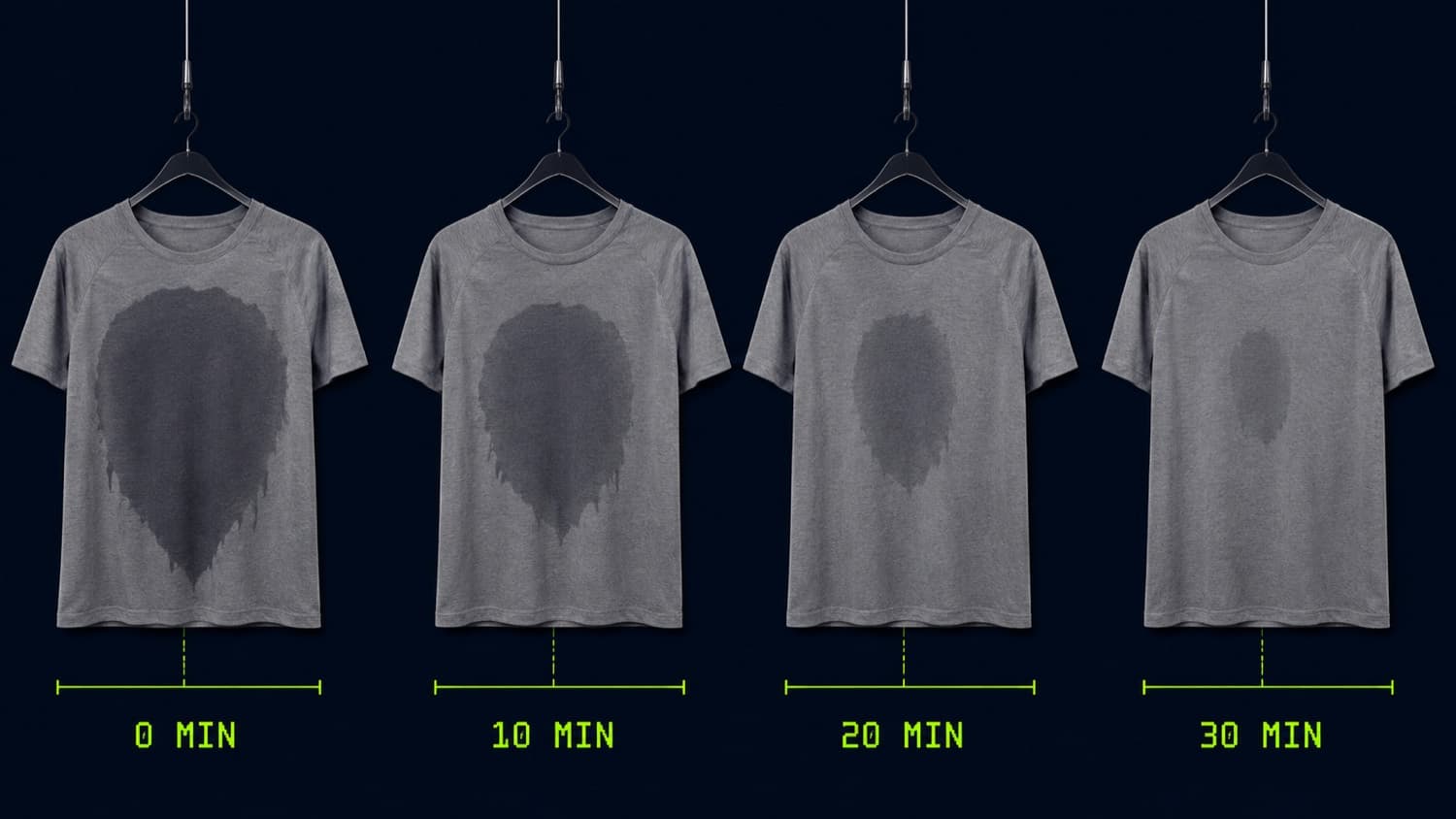
On a thin hanger, the way a garment hangs in a hallway. Laid flat everything is slower, and the ranking between fabrics changes as well.
Timed until dry paper stays clean
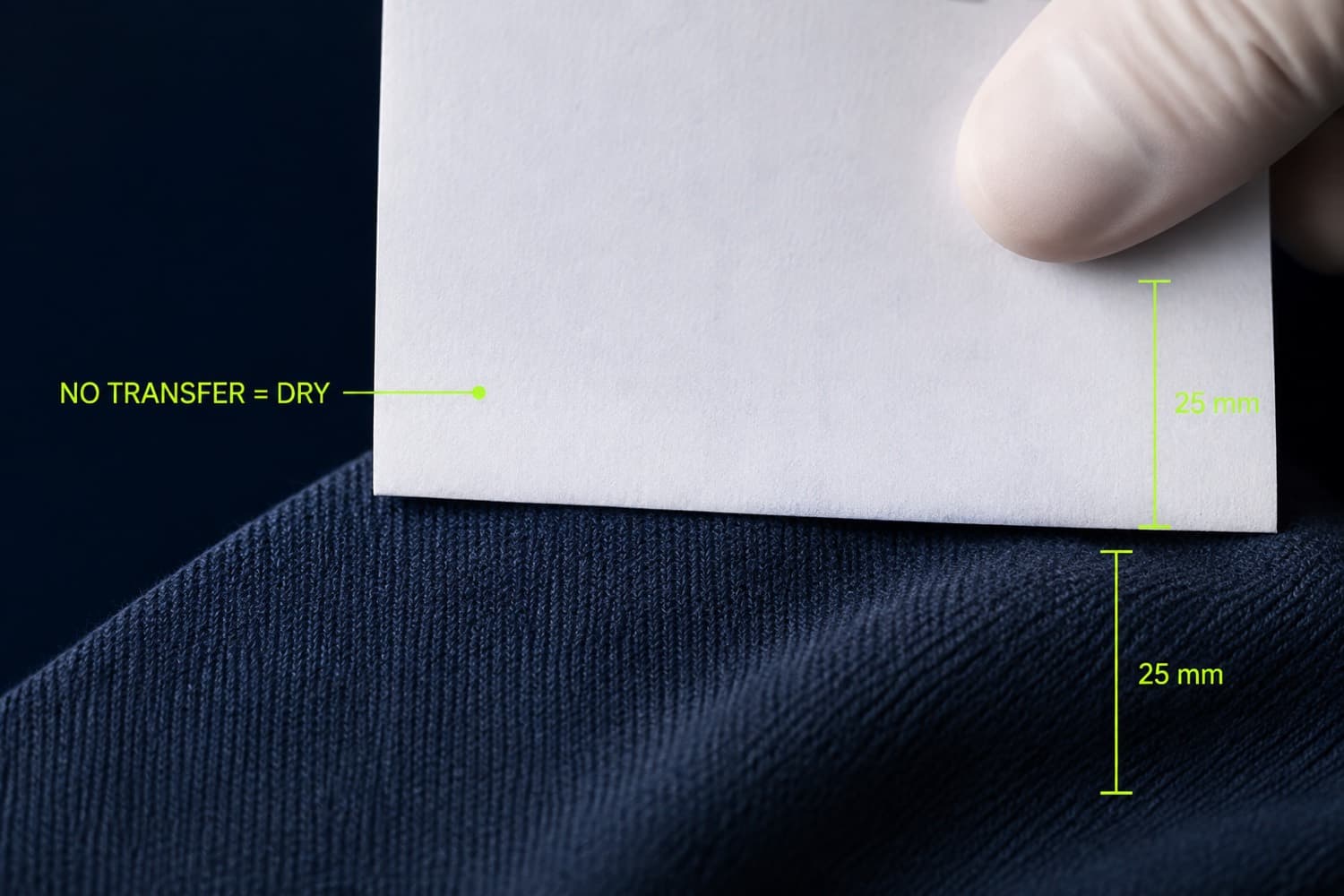
A sheet of dry paper is pressed against the fabric at the slowest point, usually a seam or a hem. When no moisture transfers, the clock stops. That is the whole test.
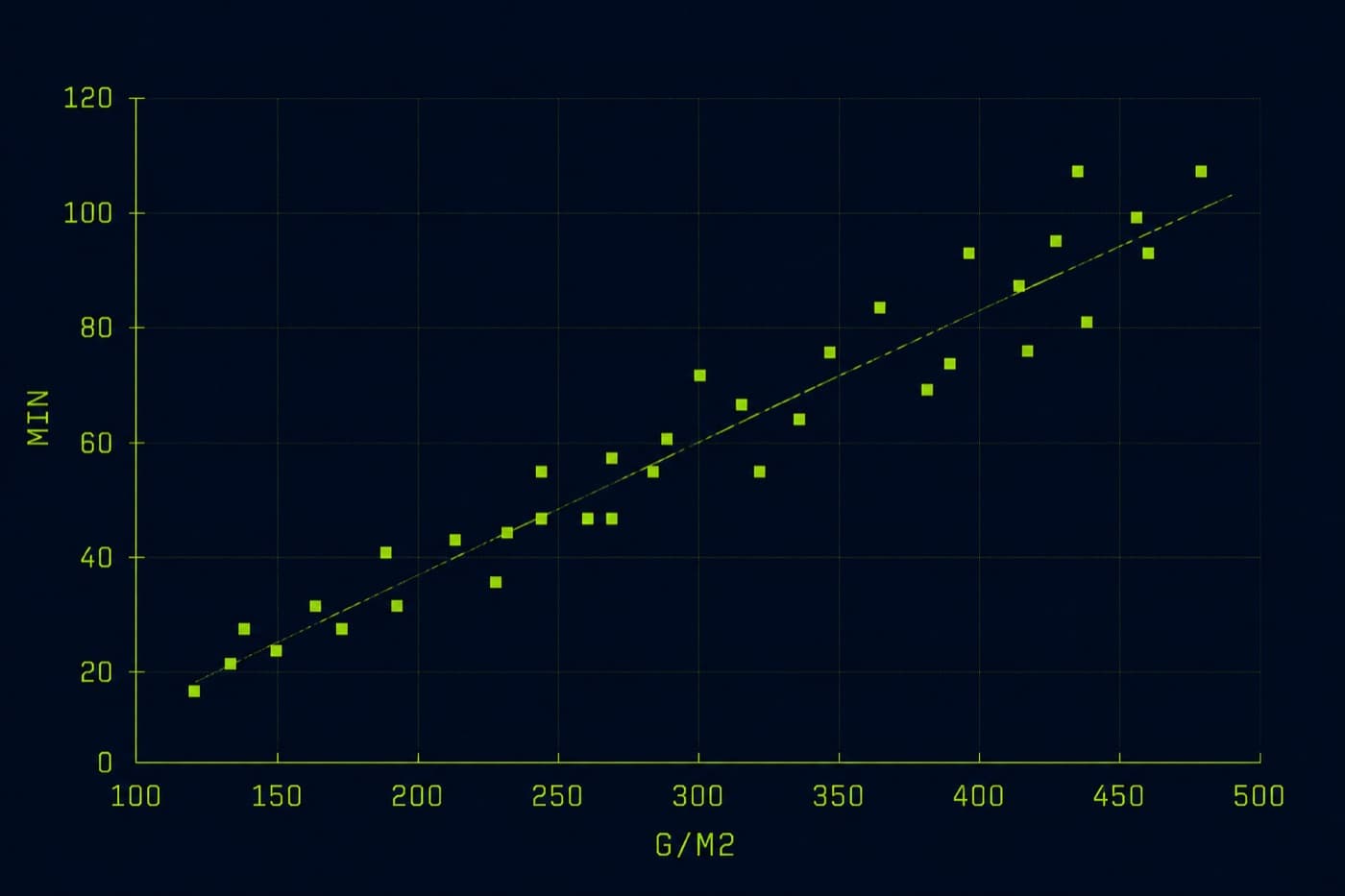
ALL 46 PIECES,
20 TO 108 MIN
The pattern in this table is not subtle. Thin, open fabrics dry fast and wear out sooner. Thick, dense fabrics dry slowly and last. There is no fabric here that does both, and we are not going to pretend otherwise.
| Min | SKU | Piece | g/m² | Seams | USD |
|---|---|---|---|---|---|
| 20 | D-08 | HIIT Premium | 98 | seamless | 138 |
| 22 | B-02 | Run Singlet | 105 | overlock | 44 |
| 22 | D-02 | HIIT Tank Mesh | 108 | overlock | 46 |
| 24 | B-08 | Run Premium | 112 | seamless | 148 |
| 26 | D-01 | HIIT Tee Mesh | 118 | flatlock | 44 |
| 26 | F-01 | Support Light | 165 | seamless | 48 |
| 26 | D-07 | HIIT Set Top | 120 | flatlock | 68 |
| 28 | B-01 | Run Tee | 120 | flatlock | 42 |
| 28 | C-02 | Studio Crop | 135 | flatlock | 42 |
| 28 | D-05 | HIIT Tee Vented | 125 | flatlock | 62 |
| 30 | D-03 | HIIT Short | 132 | flatlock | 58 |
| 30 | F-02 | Support Medium | 185 | seamless | 58 |
| 30 | B-06 | Run Tee Reflective | 128 | flatlock | 68 |
| 32 | A-02 | Lift Tank | 140 | overlock | 36 |
| 32 | B-04 | Run Short Split | 135 | overlock | 62 |
| 34 | C-06 | Studio Short | 148 | flatlock | 48 |
| 34 | D-06 | HIIT Long Sleeve | 138 | flatlock | 72 |
| 34 | F-03 | Support High | 210 | flatlock | 78 |
| 34 | A-08 | Lift Premium | 145 | seamless | 128 |
| 36 | C-01 | Studio Tee Loose | 155 | overlock | 36 |
| 36 | F-04 | Compression Calf 18 | 200 | seamless | 52 |
| 38 | A-01 | Lift Tee | 160 | flatlock | 38 |
| 38 | B-03 | Run Short Lined | 158 | flatlock | 58 |
| 38 | F-06 | Run Set | 158 | flatlock | 92 |
| 38 | E-06 | Wind Shell | 95 | overlock | 128 |
| 42 | A-03 | Lift Short 7" | 170 | flatlock | 48 |
| 42 | D-04 | HIIT Tight | 175 | flatlock | 78 |
| 42 | F-05 | Lift Set | 170 | flatlock | 78 |
| 42 | B-07 | Run Jacket Light | 105 | overlock | 118 |
| 45 | A-04 | Lift Short 9" | 178 | flatlock | 52 |
| 46 | C-08 | Studio Premium | 185 | seamless | 118 |
| 48 | C-03 | Studio Legging 7/8 | 188 | flatlock | 68 |
| 48 | B-05 | Run Tight Long | 182 | flatlock | 88 |
| 52 | A-05 | Lift Tight | 195 | flatlock | 68 |
| 52 | C-04 | Studio Legging Full | 195 | flatlock | 72 |
| 52 | E-07 | Layers Premium | 210 | flatlock | 188 |
| 52 | F-07 | Full Kit | 195 | seamless | 298 |
| 54 | C-05 | Studio Legging Pocket | 205 | flatlock | 82 |
| 58 | A-06 | Lift Jogger | 215 | overlock | 78 |
| 62 | C-07 | Studio Legging Opaque | 235 | flatlock | 88 |
| 64 | E-05 | Zip Neck Mid | 240 | flatlock | 88 |
| 68 | A-07 | Lift Tee Heavy | 220 | flatlock | 88 |
| 72 | E-03 | Training Jacket | 265 | overlock | 118 |
| 82 | E-02 | Warm-Up Pant | 285 | overlock | 68 |
| 88 | E-01 | Warm-Up Hoodie | 310 | overlock | 78 |
| 108 | E-04 | Post-Session Fleece | 360 | overlock | 98 |
Second test
THE OPACITY
CHECK
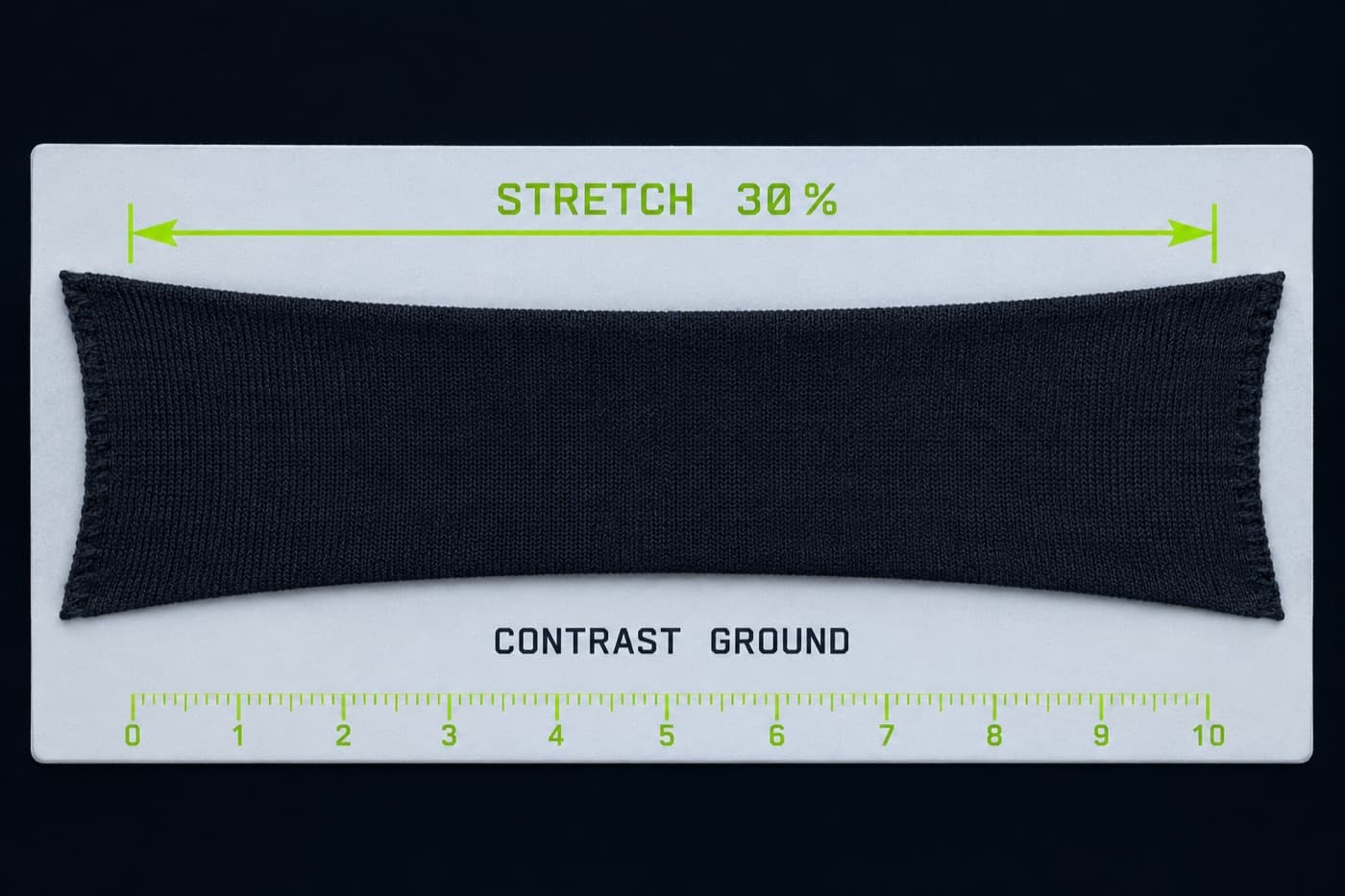
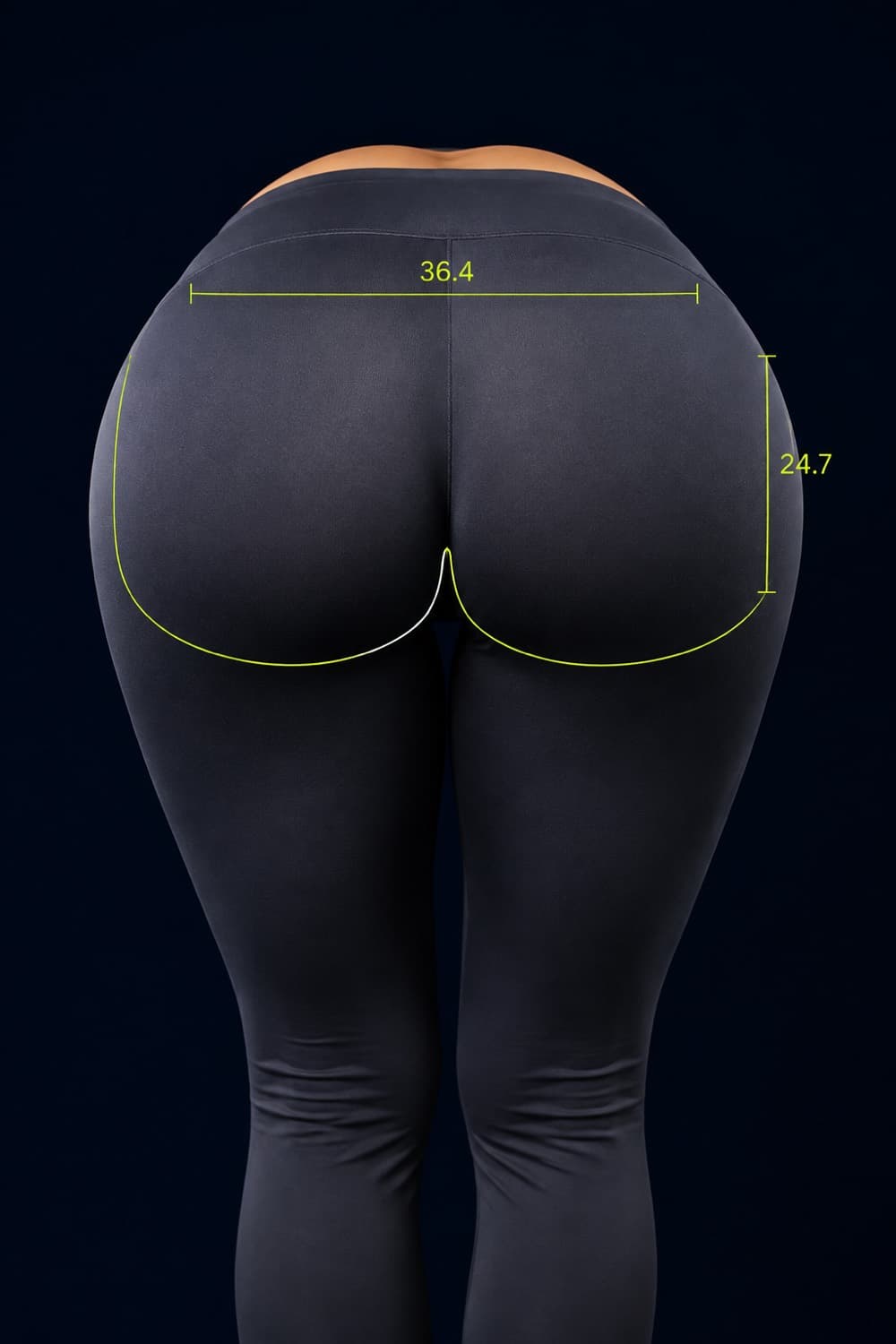
Whether a legging goes see-through when you bend is the most practical question in this category, and it is usually answered with silence. Here is the method:
- The fabric is stretched over a contrasting ground at the seat
- Held at 30% elongation, which is roughly a deep forward fold
- Viewed under standard studio lighting, not a spotlight
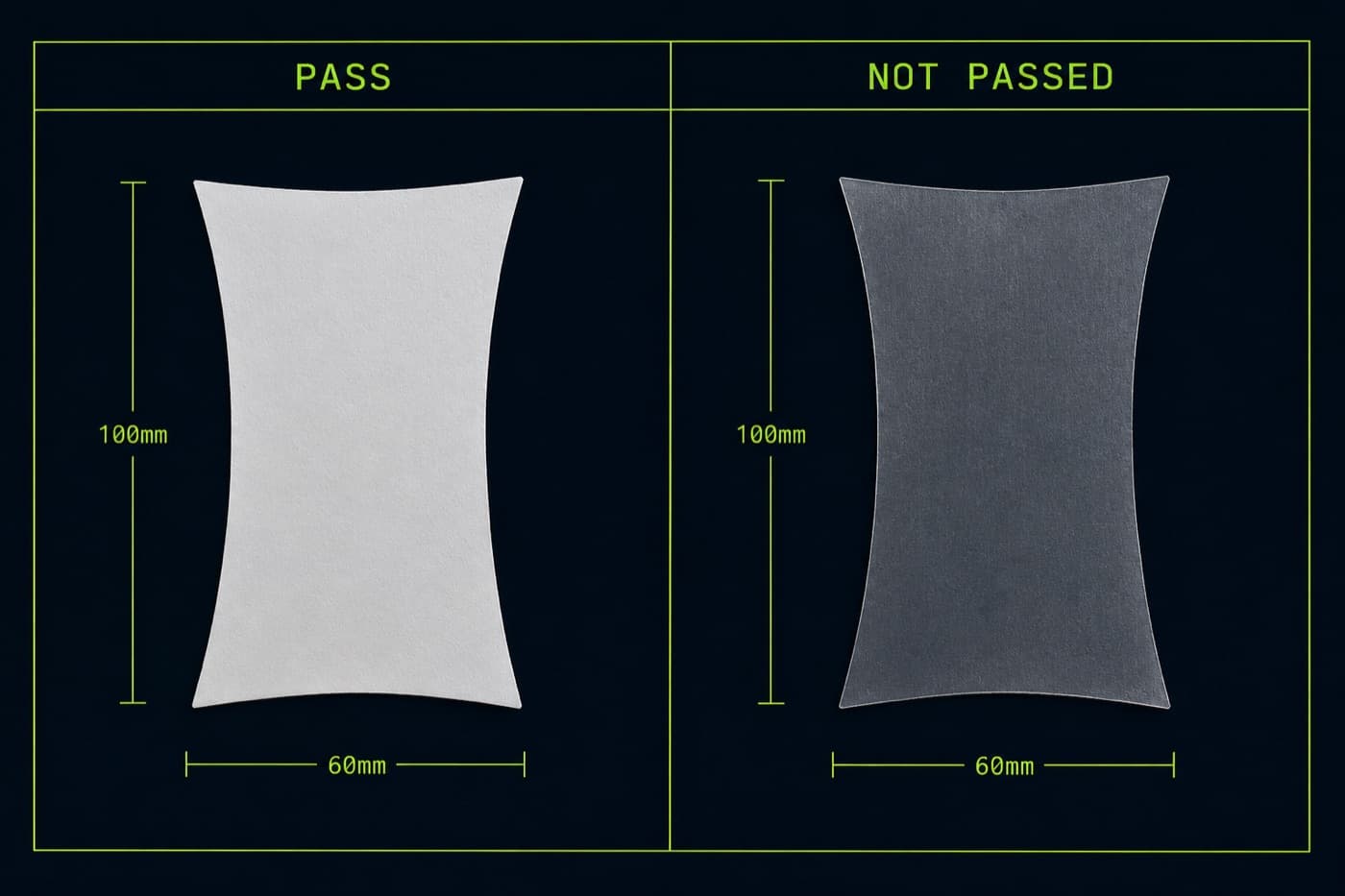
- Result recorded as passed or not passed. Nothing in between
One legging in the range did not pass: Studio Legging 7/8. It is still on sale, and the result is printed on its page. We would rather label it than quietly change the test.
Two things a number is not allowed to become
Compression: 18 mmHg
One item in the range is knitted to 18 mmHg at the calf. That is a property of the knit, measured the same way a fabric weight is.
These are not medical compression garments. If a clinician has advised compression for a medical reason, that needs a medical device, not sportswear.
Reflective print
Two items carry a reflective print. We do not test it, we do not rate it and we do not reference any high-visibility standard, because it is not that kind of product.
The reflective print is decorative. It is not high-visibility safety clothing, and it does not make you visible at every angle or distance.
21 °C · 50% RH · no forced air · hung, not laid flat